

About
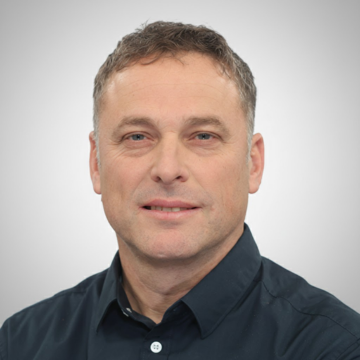
Roee Diamant is an Associate Prof. at the Dept. of Marine Technologies, University of Haifa, and heads the underwater Acoustic and Navigation Laboratory (ANL). He received his PhD from the Department of Electrical and Computer Engineering, University of British Columbia, in 2013, and his B.Sc. and the M.Sc. degrees from the Technion, Israel Institute of Technology, in 2002 and 2007, respectively. From 2001 to 2009, he worked in Rafael Advanced Defense Systems, Israel, as a project manager and systems engineer, where he developed a commercial underwater modem with network capabilities. In 2015 and 2016, he was a visiting Prof. at the University of Padova, Italy. In 2009, he received the Israel Excellent Worker First Place Award from the Israeli Presidential Institute. In 2010, he received the NSERC Vanier Canada Graduate Scholarship. Prof. Diamant has received three Best Paper awards and serves as an associate editor for the IEEE Journal of Ocean Engineering. He was the coordinator of the EU H2020 project SYMBIOSIS (BG-14 track), and is the recipient of the EU ERA-Chair appointment to the University of Zagreb, Croatia. His research interests include underwater acoustic communication, underwater localization and navigation, object detection and classification, and sonar signal processing.
Publications
- Energy extraction circuit for broadband underwater acoustic energy harvesting, Bogdanović, F., Dahan, S., Mišković, N. & Diamant, R., Dec 2026, In: Energy Conversion and Management: X. 32, 102304.
- Description of a collaborative sperm whale birth and shifts in coda vocal styles during key events, Aluma, Y., Baron, Z., Barrett, R., Baumgartner, C., Beguš, G., Bhattacharya, S., Bronstein, M. M., Dahan, S., Davis, O., de Haas, S., Defoe, J., DelPreto, J., Dessi, R., Diamant, R., Gatesy, J., George, K., Gero, S., Gibbons, D., Gibbons, D. & Gil, S. & 27 others, , Dec 2026, In: Scientific Reports. 16, 1, 9206.
- Backseat driver architecture to passively follow sperm whales by their voices with an autonomous underwater glider, Diamant, R., Pewzner, Y., Gubnitsky, G., Gruber, D. F., Tchernov, D., Beguery, L. & Sitbon, J., Dec 2026, In: Scientific Reports. 16, 1, 8738.
- Evidence for the influence of shipping underwater radiated noise on sperm whale coda structure, Diamant, R., Gruber, D. F., Gero, S. & Beguš, G., Aug 2026, In: Ecological Informatics. 97, 103881.
- Exploring statistical relations between coda sequences of Dominica sperm whale pairs, Assayag, M., Gero, S., Paradise, O. & Diamant, R., Jul 2026, In: Bioacoustics. 35, 4, p. 472-500 29 p.
- Dynamic programming-based range-depth estimation of sperm whale echolocation clicks using a two-element array, Gubnitsky, G. & Diamant, R., Jun 2026, In: Applied Ocean Research. 171, 105075.
- Design of a Matching Circuit for Energy Harvesting From a Hydrophone for Internet of Underwater Things, Hadzifejzovic, A., Maby, J., Tanfara, M., Dahan, S., Vonic, M., Miskovic, N. & Diamant, R., 1 Apr 2026, In: IEEE Journal of Oceanic Engineering. 51, 2, p. 1275-1287 13 p.
- Regularized log-linear models for predicting underwater radiated noise spectra of small vessels, Shipton, M. & Diamant, R., Apr 2026, In: Frontiers in Marine Science. 13, 1759355.
- Source localization in the presence of depth-varying sound speed: A test case for sperm whales, Buchris, Y., Aluma, Y. & Diamant, R., 5 Dec 2025, In: Applied Acoustics. 240, 110911.
- A Database of Underwater Radiated Noise from Small Vessels in the Coastal Area, Shipton, M., Obradović, J., Ferreira, F., Mišković, N., Bulat, T., Cukrov, N. & Diamant, R., Dec 2025, In: Scientific Data. 12, 1, 289.
- An open-source bio-logger for studying cetacean behavior and communication, Vogt, D. M., DelPreto, J., Salino-Hugg, M., Cummings, M. R., Bell, M. A., Kenny, A., Malkin, P., Hernandez, A. M., Wright, A. L., Duncan, M. A., Davidsen, M. R., Grewal, K., Ahuja, S., Ostrom, K., Garcia, M., Shahviri, P., Weeraratna, C., Zink, H., Pagani, S. & Meyer, G. & 5 others, , Dec 2025, In: PLOS ONE. 20, 12 December, e0337093.
- A data-driven approach to compare behavioral and physiological metrics of gilthead sea bream exposed to playback ship noise to a control group, Diamant, R., Cohen, E., Shachar, I., Kipnis, D., Mišković, N., Zemah-Shamir, Z., Itay, P. & Morick, D., Dec 2025, In: Ecological Informatics. 92, 103491.
- Automatic detection and annotation of eastern Caribbean sperm whale codas, Gubnitsky, G., Mevorach, Y., Gero, S., Gruber, D. F. & Diamant, R., Dec 2025, In: Scientific Reports. 15, 1, 12790.
- Ship Underwater Radiated Noise and Automatic Identification System Track Association, Alexandri, T. & Diamant, R., Oct 2025, In: IEEE Journal of Oceanic Engineering. 50, 4, p. 3235-3247 13 p.
- Underwater radiated noise characteristics of small vessels - An analysis of the HearMyShip database, Shipton, M., Obradović, J., Mišković, N. & Diamant, R., Jul 2025, In: Marine Pollution Bulletin. 216, 117903.
- Channel-Based Key Generation for Secure Underwater Acoustic Communications, Diamant, R., Casari, P., Ardizzon, F., Tomasin, S., Sherlock, B., Corner, T. & Neasham, J. A., Jul 2025, In: IEEE Transactions on Wireless Communications. 24, 7, p. 5678-5693 16 p.
- Design and Development of a Low-Cost Floater for Sustainable Fishing, Babić, A., Oreč, M., Mišković, N., Dahan, S., Vonić, M., Sidaropoulos, I., Cukrov, N. & Diamant, R., Jul 2025, In: IEEE Journal of Oceanic Engineering. 50, 3, p. 2209-2221 13 p.
- Multiple Mobile Target Detection and Tracking in Small Active Sonar Array, Abu, A., Mišković, N., Cukrov, N. & Diamant, R., Jun 2025, In: Remote Sensing. 17, 11, 1925.
- Investigation of a Neural Network for Dolphin Whistle Detection Through Heatmaps, Jerinic, J., Testolin, A. & Diamant, R., 27 Jan 2025, WUWNET 2024 - Proceedings of the 18th ACM International Conference on Underwater Networks and Systems. Association for Computing Machinery, Inc, (WUWNET 2024 - Proceedings of the 18th ACM International Conference on Underwater Networks and Systems).
- Foreword, Casari, P., Diamant, R., Pompili, D. & Pados, D. A., 27 Jan 2025, In: WUWNET 2024 - Proceedings of the 18th ACM International Conference on Underwater Networks and Systems. p. iii-iv
- WhAM: Towards A Translative Model of Sperm Whale Vocalization, Paradise, O., Muralikrishnan, P., Chen, L., García, H. F., Pardo, B., Diamant, R., Gruber, D. F., Gero, S. & Goldwasser, S., 2025, 39th Conference on Neural Information Processing Systems, NeurIPS 2025. Neural information processing systems foundation, p. 29269-29305 37 p. (Advances in Neural Information Processing Systems; vol. 38).
- Source Separation of Sperm Whales' Echolocation Clicks, Gubnitsky, G., Mevorach, Y., Tchernov, D. & Diamant, R., 2025, In: IEEE Transactions on Audio, Speech and Language Processing. 33, p. 4471-4485 15 p.
- Passive Detection of Scooter’s Underwater Radiated Noise, Diamant, R. & Ferreira, F., 2025, 2025 33rd European Signal Processing Conference, EUSIPCO 2025 - Proceedings. European Signal Processing Conference, EUSIPCO, p. 141-145 5 p. (European Signal Processing Conference).
- A survey of detection techniques for sperm whale and dolphin echolocation clicks, Gracic, M., Gubnitsky, G. & Diamant, R., 2025, In: Frontiers in Marine Science. 12, 1567001.
- Observational study on the non-linear response of dolphins to the presence of vessels, Diamant, R., Testolin, A., Shachar, I., Galili, O. & Scheinin, A., Dec 2024, In: Scientific Reports. 14, 1, 6062.
- A SLAM Approach to Combine Optical and Sonar Information From an AUV, Abu, A. & Diamant, R., 1 Jul 2024, In: IEEE Transactions on Mobile Computing. 23, 7, p. 7714-7724 11 p.
- Detection and characterization of ship underwater radiated narrowband noise, Alexandri, T. & Diamant, R., Jun 2024, In: Computer Networks. 248, 110480.
- A Statistical Evaluation of the Connection between Underwater Optical and Acoustic Images, Chinicz, R. & Diamant, R., Feb 2024, In: Remote Sensing. 16, 4, 689.
- SOUND: A Swarm of Low-Cost Floaters for Sustainable Fishing, Babic, A., Orec, M., Miskovic, N. & Diamant, R., 2024, OCEANS 2024 - Singapore, OCEANS 2024. Institute of Electrical and Electronics Engineers Inc., (Oceans Conference Record (IEEE)).
- Detecting the Presence of Sperm Whales' Echolocation Clicks in Noisy Environments, Gubnitky, G. & Diamant, R., 2024, In: IEEE/ACM Transactions on Audio Speech and Language Processing. 32, p. 2050-2061 12 p.
- A Key Agreement Algorithm for Securing Underwater Acoustic Communications, Diamant, R., Casari, P., Ardizzon, F., Tomasin, S., Corner, T., Sherlock, B. & Neasham, J., 2024, OCEANS 2024 - Singapore, OCEANS 2024. Institute of Electrical and Electronics Engineers Inc., (Oceans Conference Record (IEEE)).
- Interception of Bio-Mimicking Underwater Acoustic Communications Signals, Mishali, T., Casari, P. & Diamant, R., 2024, In: IEEE Internet of Things Journal. 11, 16, p. 27620-27634 15 p.
- Probabilistic Positioning of a Mooring Cable in Sonar Images for In-Situ Calibration of Marine Sensors, Oliveira, A. J., Ferreira, B. M., Cruz, N. A. & Diamant, R., 2024, In: IEEE Transactions on Mobile Computing. 23, 9, p. 8855-8868 14 p.
- An Efficient Drifters Deployment Strategy to Evaluate Water Current Velocity Fields, Tukan, M., Biton, E. & Diamant, R., 2024, In: IEEE Journal of Oceanic Engineering. 49, 4, p. 1455-1471 17 p.
- Acoustic projectors make covert bioacoustic chirplet signals discoverable, Casari, P., Neasham, J., Gubnitsky, G., Eccher, D. & Diamant, R., Dec 2023, In: Scientific Reports. 13, 1, 2591.
- A remote sensing approach for exploring the dynamics of jellyfish, relative to the water current, Diamant, R., Alexandri, T., Barak, N. & Lotan, T., Dec 2023, In: Scientific Reports. 13, 1, 14769.
- Underwater object classification combining SAS and transferred optical-to-SAS Imagery, Abu, A. & Diamant, R., Dec 2023, In: Pattern Recognition. 144, 109868.
- Long-Range Underwater Acoustic Channel Estimation, Jiang, W. & Diamant, R., 1 Sep 2023, In: IEEE Transactions on Wireless Communications. 22, 9, p. 6267-6282 16 p.
- The Texas A&M – University of Haifa Eastern Mediterranean Observatory: Monitoring the Eastern Mediterranean Sea, Milton, G., Dimarco, S. F., Knap, A. H., Walpert, J. & Diamant, R., Mar 2023, In: Oceanography. 36, 1, p. 69 1 p.
- Preliminary study on the impact of acoustic emissions on fish, Ferreira, F., Diamant, R., Shachar, I., Badi, A., Mišković, N. & Morick, D., 2023, OCEANS 2023 - Limerick, OCEANS Limerick 2023. Institute of Electrical and Electronics Engineers Inc., (OCEANS 2023 - Limerick, OCEANS Limerick 2023).
- Secret Key Generation From Route Propagation Delays for Underwater Acoustic Networks, Diamant, R., Tomasin, S., Ardizzon, F., Eccher, D. & Casari, P., 2023, In: IEEE Transactions on Information Forensics and Security. 18, p. 3318-3333 16 p.
- Transfer Learning of Image Classification Networks in Application to Dolphin Whistle Detection, Lu, X., Lampe, L., Korkmaz, B. N., Testolin, A. & Diamant, R., 2023, OCEANS 2023 - Limerick, OCEANS Limerick 2023. Institute of Electrical and Electronics Engineers Inc., (OCEANS 2023 - Limerick, OCEANS Limerick 2023).
- Clustering of Multiple Ships Underwater Radiated Noise, Alexandri, T. & Diamant, R., 2023, OCEANS 2023 - Limerick, OCEANS Limerick 2023. Institute of Electrical and Electronics Engineers Inc., (OCEANS 2023 - Limerick, OCEANS Limerick 2023).
- The Kiss of the Pink Dolphin: Characterization of Recordings in the Ecuadorian Amazonian, Diamant, R., Ulloa, C., Scheinin, A. & Rivas-Torres, G., 2023, OCEANS 2023 - Limerick, OCEANS Limerick 2023. Institute of Electrical and Electronics Engineers Inc., (OCEANS 2023 - Limerick, OCEANS Limerick 2023).
- Interception of bio-mimicked underwater acoustic communications, Mishali, T. & Diamant, R., 2023, OCEANS 2023 - Limerick, OCEANS Limerick 2023. Institute of Electrical and Electronics Engineers Inc., (OCEANS 2023 - Limerick, OCEANS Limerick 2023).
- PRACTICAL SECURITY FOR UNDERWATER ACOUSTIC NETWORKS: PUBLISHED RESULTS FROM THE SAFE-UCOMM PROJECT, Casari, P., Diamant, R., Tomasin, S., Neasham, J. & Lampe, L., 2023, Forum Acusticum 2023 - 10th Convention of the European Acoustics Association, EAA 2023. European Acoustics Association, EAA, (Proceedings of Forum Acusticum).
- Inter-Pulse Estimation for Sperm Whale Click Detection, Gubnitsky, G. & Diamant, R., 2023, ICASSP 2023 - 2023 IEEE International Conference on Acoustics, Speech and Signal Processing, Proceedings. Institute of Electrical and Electronics Engineers Inc., (ICASSP, IEEE International Conference on Acoustics, Speech and Signal Processing - Proceedings; vol. 2023-June).
- Nature reserves facilitate conservation of the Mediterranean slipper lobster Scyllarides latus, Miller, E., Spanier, E., Diamant, R. & Yahel, R., 2023, In: Marine Ecology Progress Series. 714, p. 57-69 13 p.
- Combining denoising autoencoders and dynamic programming for acoustic detection and tracking of underwater moving targets†, Testolin, A. & Diamant, R., 2 May 2020, In: Sensors. 20, 10, 2945.
- A Parallel Decoding Approach for Mitigating Near-Far Problems in Underwater Acoustic Communications Networks, Zhou, Y., Tong, F. & Diamant, R., 2019, In: Underwater Acoustic Conference and Exhibition Series. p. 259-263 5 p.
Education
Academic Background
- 01/2016-08/2016 University of Padova, Information Engineering Visiting Professor
- 08/2016-10/2021 University of Haifa, Marine Technologies Assistant Professor
- 10/2021- (*) University of Haifa, Marine Technologies Associate Professor (Tenured)
- 01/2023-(*) University of Zagreb, Faculty of Electrical and Computing Engineering Adjacent Professor
Research Areas
Awards
- Intel Research - Intel Research Excellent Reward 2007
- Israel Presidential Institute. Awarded by President Shimon Peres Excellence in work - First place in the National Excellent Worker Competition 2009
- Fullbright Scholarship “Participants are chosen for their academic merit and leadership potential.”, 25k$ - Government of the USA 2009
- Four Year Fellowship “Ensures UBC’s best PhD students are provided with financial support", 18k$. - University of British Columbia 2009-2013
- Vanier Canada Graduate Scholarship “Supporting individuals who demonstrate strong leadership skills and a high standard of scholarly achievement in graduate studies in health, natural sciences, engineering, humanities and social sciences", 150k$ - Government of Canada 2010-2013
- Best Student Paper Competition Research innovation - IEEE Vancouver Section 2010
- University of British Columbia Mobility - Mobility Award 2010
- National University of Singapore Mobility - The Lee Foundation Award 2011
- Rafael - Achievement at work-Creativity Award 2014
- European Union Mobility - EDEN scholarship 2015
- Government of Germany Research Proposal - Humboldt post-doctroal fellowship (scholarship not used at the end) 2015
- University of Padova, Italy Mobility - Visiting Researcher 2015
- University of Padova, Italy Teaching - Visiting Professor 2016
- WUWNet, China Research - Best Paper Award (F21) 2016
- WPNC, Germany Research - Best Paper Award (F22) 2016
- WPNC, Germany Research - Best Paper Award (F28) 2017
- IEEE Oceanic Engineering Research - Reviewer of the year 2018
- EU Erasmus Research - Faculty mobility award 2020
- University of Zagreb Research - Research excellence award (*) 2024
- Stanford university Research Top 2% scientist (*) 2025
Additional Info
Prof. Diamant leads the Underwater Acoustic & Navigation Laboratory (ANL), focusing on underwater acoustics, signal processing, navigation, and marine-environment monitoring. He and his team develop algorithms and systems for underwater communication and localization — for example enabling acoustic communication and data transmission between submerged sensors, buoys and shore stations.
On the detection front, his work includes methods for automatic detection and segmentation of underwater objects — using sonar imagery to identify items on the seafloor or in the water without prior assumptions about their shape or size. He also researches multispectral sonar detection: by combining sonar data at different frequencies his algorithms can better distinguish man-made objects from natural background, improving detection reliability even in complex seabed conditions.
Beyond object detection, Prof. Diamant’s lab works on marine-biological applications: tracking and monitoring marine life (fish, marine mammals) via acoustic methods; classifying and estimating biomass; and developing multimodal acoustic-optical systems to monitor fish populations — aiming at sustainable fisheries and conservation.
Finally, through the marine observatory THEMO, his group builds infrastructure for long-term environmental monitoring: deep-sea hubs and buoy systems that collect data on physical, chemical and acoustic parameters — enabling assessment of pollution, underwater noise, marine ecosystem health, and climate-related changes over time.