

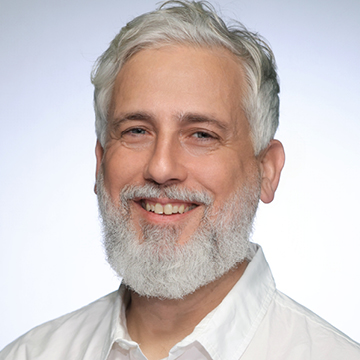
About
Ocean engineering is my primary research field, with a focus on hydrodynamics and conceptual naval architecture and design. I combine numerical simulation with physical testing to improve the design and performance of complex floating structures in waves. My research centres on floating-system architecture, especially developing new methodologies for floating artificial islands in open-sea conditions. This work responds to climate change, coastal urban pressures, and disaster-risk mitigation, and reflects my ambition to unlock the ocean as an alternative, sustainable environment for human development in harmony with nature.
Publications
- A pure ceramic 3D printed artificial reef — stability and response, Berman, O., Zavadsky, A., Drimer, N., Shashar, N., Wang, G. & Tarazi, E., 10 Sep 2025, In: Journal of Cleaner Production. 523, 146380.
- Towards a Comprehensive Evaluation of Sediment Transport Caused by Off-the-Coast Modular Floating Structures’ (MFS) Breakwaters, Asher, S. & Wang, G., 2025, Proceedings of the 4th World Conference on Floating Solutions: WCFS 2024. Zhao, X. L., Dai, J.-G., Liu, S. & Lim, S. H. (eds.). Springer Science and Business Media Deutschland GmbH, p. 735-743 9 p. (Lecture Notes in Civil Engineering; vol. 597 LNCE).
- Unlocking the Global Potential of Urban Development Offshore Floating Solutions in the Mediterranean Region, Wang, G., Bikker, L. & Fishman, T., 2025, Proceedings of the 4th World Conference on Floating Solutions: WCFS 2024. Zhao, X. L., Dai, J.-G., Liu, S. & Lim, S. H. (eds.). Springer Science and Business Media Deutschland GmbH, p. 71-79 9 p. (Lecture Notes in Civil Engineering; vol. 597 LNCE).
- Wave Absorbance System for Towing Tanks, Berman, O., Tarazi, E., Roumen, T. & Wang, G., 2025, Proceedings of the 4th World Conference on Floating Solutions: WCFS 2024. Zhao, X. L., Dai, J.-G., Liu, S. & Lim, S. H. (eds.). Springer Science and Business Media Deutschland GmbH, p. 991-999 9 p. (Lecture Notes in Civil Engineering; vol. 597 LNCE).
- Modular Floating Structures for Offshore Urban Development in Real Sea Conditions, Wang, G., 2025, Lecture Notes in Civil Engineering. Springer Science and Business Media Deutschland GmbH, p. 135-168 34 p. (Lecture Notes in Civil Engineering; vol. 636).
- The potential of end-of-life ships as a floating seawall and the methodical use of gap resonance for wave attenuation, Wang, G., Bar, D. & Schreier, S., 15 Apr 2024, In: Ocean Engineering. 298, 117246.
- Floating Urban Development—Sustainable Growth and Affordable Housing, Wang, G., Bar, D., Hooimeijer, F. & Schreier, S., 2024, Proceedings of the 3rd World Conference on Floating Solutions - WCFS 2023. Ikoma, T., Tabeta, S., Lim, S. H. & Wang, C. M. (eds.). Springer Science and Business Media Deutschland GmbH, p. 81-100 20 p. (Lecture Notes in Civil Engineering; vol. 465).
- URBAN DEVLOPMENT ON MODULAR FLOATING STRUCTURES FOR DISASTER MITIGATION IN COASTAL CITIES, Wang, G., Drimer, N. & Goldfeld, Y., 2021, World Conference on Earthquake Engineering proceedings. International Association for Earthquake Engineering, 5g-0007. (World Conference on Earthquake Engineering proceedings; vol. 2021).
- Occupant comfort analysis for rigid floating structures–methodology and design assessment for offshore dwelling module, Wang, G., Rosenfeld, Y., Drimer, N. & Goldfeld, Y., 2021, In: Ships and Offshore Structures. 16, 2, p. 184-199 16 p.
- Modular floating structures (MFS) for offshore dwelling a hydrodynamic analysis in the frequency domain, Wang, G., Drimer, N. & Goldfeld, Y., 15 Nov 2020, In: Ocean Engineering. 216, 107996.
- Expanding coastal cities – Proof of feasibility for modular floating structures (MFS), Wang, G., Goldfeld, Y. & Drimer, N., 10 Jun 2019, In: Journal of Cleaner Production. 222, p. 520-538 19 p.
Academic Background
I am a naval architect and marine engineer, serving as an Assistant Professor in the Hatter Department of Marine Technologies.
After completing my B.Eng. in Naval Architecture and Marine Engineering at Inholland Delft University of Applied Sciences (Delft, the Netherlands) in 2007, I joined the Amsterdam-based superyacht design studio Dykstra Naval Architects, where I worked for nearly a decade as a core member of the design team. In 2014, I began an M.Sc. in Civil and Environmental Engineering at the Technion – Israel Institute of Technology (IIT), which transitioned in 2016 into a direct-track Ph.D. program. Following the completion of my doctoral research in 2021, I undertook a two-year postdoctoral fellowship at the Ship Hydromechanics Laboratory at Delft University of Technology (TU Delft). From 2023 to 2026, I served as Chief Scientist at the Israeli Coastal and Marine Engineering Research Institute (CAMERI) at the Technion – IIT, where I led academic research and innovation, working closely with both research institutes, universities and industry.
I combine high-fidelity numerical simulation with physical testing to push the design and performance of complex floating structures for urban development in open-water conditions. Beyond hydromechanics and ocean engineering, I integrate industrial ecology, and ecological design frameworks to create floating solutions that strengthen coastal resilience and support biodiversity.