

About
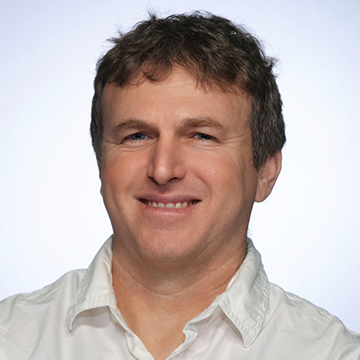
I completed my PhD in Life Sciences at Ben-Gurion University in 2017, where I studied larval dispersal and population connectivity in the marine environment. I then crossed the ocean to join the University of Miami, focusing on marine pollution dynamics and developing quantitative models to understand how oil moves through and affects marine ecosystems. From 2019 to 2022, I continued this trajectory as a postdoctoral fellow and Assistant Scientist with CIMAS and NOAA Fisheries, expanding my work to marine ecosystem dynamics and large-scale predictive modeling.
Publications
- Historical depletion and future drought-driven risks to Gulf of Mexico fisheries production, Berenshtein, I., Kirtman, B., de Mutsert, K. & Chagaris, D. D., Dec 2026, In: Nature Communications. 17, 1, 2409.
- Species-specific sensitivity to PAHs reveals widespread biodiversity impact from the 2021 oil spill in the Eastern Mediterranean, Lapidot, O., Perlin, N., Biton, E., Khain, P., Levi, Y., Alpert, P., Ramon, D., Stern, N., Rilov, G., Guy-Haim, T., Lehahn, Y., Paris, C. B. & Berenshtein, I., Dec 2026, In: Marine Pollution Bulletin. 233, 120090.
- Lessons learned by addressing challenges to deep-sea conservation planning in the Southeastern Mediterranean Sea: linking science to practice, Shabtay, A., Rothschild, A., Makovsky, Y., Neuman, A., Bialik, O., Goren, L., Idan, T., Slavenko, A., Salingré, S., Buba, Y., Guy-Haim, T., Herut, B., Stern, N., Gertman, I., Gilboa, M., Gal, G., Ofir, E., Rubin Blum, M., Berenshtein, I. & Amir, D. & 4 others, , Aug 2025, In: Ocean and Coastal Management. 267, 107700.
- Modelling Non-Indigenous Ascidian Larval Dispersal in the Coastal Waters of the Eastern Mediterranean Sea, Berenshtein, I. & Shenkar, N., May 2025, In: Diversity and Distributions. 31, 5, e70009.
- Directional swimming patterns in jellyfish aggregations, Malul, D., Berman, H., Solodoch, A., Tal, O., Barak, N., Mizrahi, G., Berenshtein, I., Toledo, Y., Lotan, T., Sher, D., Shavit, U. & Lehahn, Y., 9 Sep 2024, In: Current Biology. 34, 17, p. 4033-4038.e5
- Marine top secrets: Ichthyoplankton in surface water uncover hidden knowledge on fish diversity and distribution, Guerchon, J., Morov, A. R., Tagar, A., Rubin-Blum, M., Tikochinski, Y., Berenshtein, I., Rilov, G. & Stern, N., 5 Mar 2023, In: Estuarine, Coastal and Shelf Science. 282, 108226.
- Identifying trade-offs and reference points in support of ecosystem approaches to managing Gulf of Mexico menhaden, Berenshtein, I., Sagarese, S. R., Lauretta, M. V., Schueller, A. M. & Chagaris, D. D., 6 Jan 2023, In: Frontiers in Marine Science. 9, 935324.
- Evidence for a consistent use of external cues by marine fish larvae for orientation, Berenshtein, I., Faillettaz, R., Irisson, J. O., Kiflawi, M., Siebeck, U. E., Leis, J. M. & Paris, C. B., Dec 2022, In: Communications Biology. 5, 1, 1307.
- Towards integrated modeling of the long-term impacts of oil spills, Solo-Gabriele, H. M., Fiddaman, T., Mauritzen, C., Ainsworth, C., Abramson, D. M., Berenshtein, I., Chassignet, E. P., Chen, S. S., Conmy, R. N., Court, C. D., Dewar, W. K., Farrington, J. W., Feldman, M. G., Ferguson, A. C., Fetherston-Resch, E., French-McCay, D., Hale, C., He, R., Kourafalou, V. H. & Lee, K. & 23 others, , Sep 2021, In: Marine Policy. 131, 104554.
- Ten years of modeling the Deepwater Horizon oil spill, Ainsworth, C. H., Chassignet, E. P., French-McCay, D., Beegle-Krause, C. J., Berenshtein, I., Englehardt, J., Fiddaman, T., Huang, H., Huettel, M., Justic, D., Kourafalou, V. H., Liu, Y., Mauritzen, C., Murawski, S., Morey, S., Özgökmen, T., Paris, C. B., Ruzicka, J., Saul, S. & Shepherd, J. & 7 others, , Aug 2021, In: Environmental Modelling and Software. 142, 105070.
- Mesophotic reef geomorphology categorization, habitat identification, and relationships with surface cover and terrace formation in the Gulf of Aqaba, Weinstein, D. K., Tamir, R., Kramer, N., Eyal, G., Berenshtein, I., Shaked, Y., Loya, Y. & Torfstein, A., 15 Apr 2021, In: Geomorphology. 379, 107548.
- Impacts of a local music festival on fish stress hormone levels and the adjacent underwater soundscape, Cartolano, M. C., Berenshtein, I., Heuer, R. M., Pasparakis, C., Rider, M., Hammerschlag, N., Paris, C. B., Grosell, M. & McDonald, M. D., Oct 2020, In: Environmental Pollution. 265, 114925.
- Invisible oil beyond the Deepwater Horizon satellite footprint, Berenshtein, I., Paris, C. B., Perlin, N., Alloy, M. M., Joye, S. B. & Murawski, S., 2020, In: Science Advances. 6, 7, eaaw8863.
- Predicting the impact of future oil-spill closures on fishery-dependent communities - A spatially explicit approach, Berenshtein, I., O'Farrell, S., Perlin, N., Sanchirico, J. N., Murawski, S. A., Perruso, L. & Paris, C. B., 1 Dec 2019, In: ICES Journal of Marine Science. 76, 7, p. 2276-2285 10 p.
- BP Gulf Science Data Reveals Ineffectual Subsea Dispersant Injection for the Macondo Blowout, Paris, C. B., Berenshtein, I., Trillo, M. L., Faillettaz, R., Olascoaga, M. J., Aman, Z. M., Schlüter, M. & Joye, S. B., 30 Oct 2018, In: Frontiers in Marine Science. 5, 389.
- Biophysical Simulations Support Schooling Behavior of Fish Larvae Throughout Ontogeny, Berenshtein, I., Paris, C. B., Gildor, H., Fredj, E., Amitai, Y. & Kiflawi, M., 25 Jul 2018, In: Frontiers in Marine Science. 5, 254.
- Auto-correlated directional swimming can enhance settlement success and connectivity in fish larvae, Berenshtein, I., Paris, C. B., Gildor, H., Fredj, E., Amitai, Y., Lapidot, O. & Kiflawi, M., 14 Feb 2018, In: Journal of Theoretical Biology. 439, p. 76-85 10 p.
- Quantitative species-level ecology of reef fish larvae via metabarcoding, Kimmerling, N., Zuqert, O., Amitai, G., Gurevich, T., Armoza-Zvuloni, R., Kolesnikov, I., Berenshtein, I., Melamed, S., Gilad, S., Benjamin, S., Rivlin, A., Ohavia, M., Paris, C. B., Holzman, R., Kiflawi, M. & Sorek, R., 1 Feb 2018, In: Nature Ecology and Evolution. 2, 2, p. 306-316 11 p.
- Size Matters: Observed and modeled camouflage response of European Cuttlefish (Sepia officinalis) to different substrate patch sizes during movement, Josef, N., Berenshtein, I., Rousseau, M., Scata, G., Fiorito, G. & Shashar, N., 2017, In: Frontiers in Physiology. 7, JAN, 671.
- Effect of oxygen on coral fanning by mutualistic fish, Berenshtein, I., Reuben, Y. & Genin, A., 1 Dec 2015, In: Marine Ecology. 36, 4, p. 1171-1175 5 p.
- Camouflage during movement in the European cuttlefish (Sepia officinalis), Josef, N., Berenshtein, I., Fiorito, G., Sykes, A. V. & Shashar, N., 1 Nov 2015, In: Journal of Experimental Biology. 218, 21, p. 3391-3398 8 p.
- From the ocean to a reef habitat: How do the larvae of coral reef fishes find their way home? A state of art on the latest advances, Barth, P., Berenshtein, I., Besson, M., Roux, N., Parmentier, E., Banaigs, B. & Lecchini, D., 1 Jun 2015, In: Vie et Milieu. 65, 2, p. 91-100 10 p.
- Polarized light sensitivity and orientation in coral reef fish post-larvae, Berenshtein, I., Kiflawi, M., Shashar, N., Wieler, U., Agiv, H. & Paris, C. B., 7 Feb 2014, In: PLOS ONE. 9, 2, e88468.
Education
Academic Background
Research Areas
Awards
Throughout my career, I have received numerous competitive research grants as well as academic awards recognizing excellence in marine science, ecological modeling, and environmental research.
My early achievements include the Berko Award for Outstanding Research from the Inter-University Institute in Eilat (2009) and the Award for Academic Outstanding Achievements from Ben-Gurion University (2011). In 2013, my research on larval fish was recognized with both the John H.S. Blaxter Award for Best Poster Presentation at the Larval Fish Conference and the Best Poster Award at the Israeli Association for Aquatic Sciences Conference. I later received the Chen Efrat Scholarship Award for Excellence in Teaching (2014), followed in 2016 by the Sally Richardson Award for Best Oral Presentation and a Travel Award from the Larval Fish Conference. Most recently, I was selected for the prestigious Zuckerman STEM Leadership Program (2023–2026), supporting emerging scientific leaders in Israel and the United States.
In parallel to these awards, I have been the Principal Investigator or Co-Investigator on multiple funded research projects spanning larval connectivity, marine pollution modeling, and ecosystem dynamics. In 2016, I served as Co-Investigator and lead researcher on a project funded by the Israel Nature & Parks Authority examining population connectivity in the Gulf of Aqaba/Eilat using biophysical modeling.
From 2019 to 2022, I led a major Yad Hanadiv–funded project investigating connectivity among marine reserves in the Israeli Mediterranean, carried out together with additional co-PIs. Subsequent grants include support from the Society for the Protection of Nature in Israel (2023, 2024) for research on connectivity among deep-sea habitats and the potential impacts of offshore oil spills on Israel’s Exclusive Economic Zone.
I also received funding from the University of Haifa Data Science Research Center (2024) for a project aimed at predicting marine organisms’ sensitivity to chronic oil pollution, and in 2025 was awarded two additional grants: one focused on environmental risk assessment in collaboration with partners from the Israel Ports Company, and another large interdisciplinary project funded by Yad Hanadiv and the Israel Nature and Parks Authority, conducted with additional co-PIs.
Media
https://www.calcalist.co.il/local_news/article/r17m2ntta
https://www.globes.co.il/news/article.aspx?did=1001363308&utm_medium=referral&utm_source=newsletter&utm_campaign=immediatenewsalert
https://www.zavit.org.il/המחיר-האמיתי-של-הזיהום
https://lbscience.org/בעקבות-הנפט-הבלתי-נראה/
https://eurekalert.org/pub_releases/2020-02/uomr-nss021020.php
https://www.washingtonpost.com/climate-environment/2020/02/12/toxic-reach-deepwater-horizons-oil-spill-was-much-larger-deadlier-than-previous-estimates-new-study-says/
https://www.coastalreview.org/2020/04/ten-years-after-deepwater-horizon-disaster/
https://www.miamiherald.com/news/local/environment/article221964565.html