

About
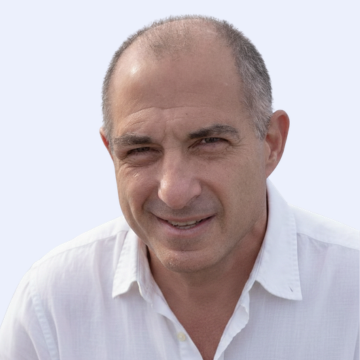
Prof. Dan Tchernov currently serves as Head of the Leon H. Charney School of Marine Sciences at the University of Haifa, leading the institution in recent years to significant achievements on both the national and international stage. Over decades of groundbreaking research, he founded the Department of Marine Biology and was among the key figures who transformed the University of Haifa into one of the most important marine research centers in the Eastern Mediterranean.
His work focuses on understanding the survival mechanisms, physiology, and ecology of marine invertebrates, particularly coral reef systems—complex and delicate ecosystems that he has been passionately studying for more than thirty years.
As the founder and senior scientific lead of the University’s marine research stations—the Morris Kahn Marine Research Station and the Kadas Nexus Center for Blue Technologies—Prof. Tchernov spearheads the development of cutting-edge research infrastructures that enable scientists and students to explore the marine environment at a globally competitive level. Under his leadership, unique experimental systems have been established, international collaborations have flourished, and an academic framework has been built to train the next generation of marine scientists, integrating applied science, technology, and long-term environmental vision.
His research style is characterized by a rare combination of advanced experimental capability, broad ecological thinking, and scientific creativity that allows him to identify environmental processes before they escalate into crises. Prof. Tchernov has made significant contributions to understanding the impact of climate change on marine invertebrates and the delicate interactions that sustain marine life in a changing environment. Alongside his scientific endeavors, he has devoted many years to teaching, mentoring, and guiding students, and is recognized as one of the lecturers who inspire enthusiasm for marine research from the very first moment students encounter the sea through his scientific perspective.
Having played a central role in initiatives related to marine technologies, sustainability, natural resource management, and the development of the University of Haifa’s Sea Campus, Prof. Tchernov continues to steer the School of Marine Sciences toward a future where profound and impactful scientific research is conducted alongside a broad socio-environmental vision, training a generation of researchers and faculty who will lead the field in Israel and worldwide.
Publications
- Backseat driver architecture to passively follow sperm whales by their voices with an autonomous underwater glider, Diamant, R., Pewzner, Y., Gubnitsky, G., Gruber, D. F., Tchernov, D., Beguery, L. & Sitbon, J., Dec 2026, In: Scientific Reports. 16, 1, 8738.
- Description of a collaborative sperm whale birth and shifts in coda vocal styles during key events, Aluma, Y., Baron, Z., Barrett, R., Baumgartner, C., Beguš, G., Bhattacharya, S., Bronstein, M. M., Dahan, S., Davis, O., de Haas, S., Defoe, J., DelPreto, J., Dessi, R., Diamant, R., Gatesy, J., George, K., Gero, S., Gibbons, D., Gibbons, D. & Gil, S. & 27 others, , Dec 2026, In: Scientific Reports. 16, 1, 9206.
- Salinity stress enhances protein content and amino acid profile in Gracilaria cornea (Rhodophyta), Tadmor-Shalev, N., Shemesh, E., Israel, Á., Ghermandi, A., Tchernov, D. & Brook, A., Dec 2026, In: Scientific Reports. 16, 1, 6943.
- Structural Variation in Whistle Patterns of Two Coastal Dolphin Species Co-Occurring in the Southern Israeli Mediterranean Sea, Zuriel, Y. E., Aharoni, I., Atch, D., Galili, O., Tchernov, D., Scheinin, A. & Kerem, D., Oct 2026, In: Marine Mammal Science. 42, 4, e70243.
- Machine learning–based decision support for harvest optimization in commercial microalgae photobioreactors: A field validation study, Kadosh, E., Eisenstadt, D., Gamliel, O., Levy, A., Sasson, A., Bogin, Y., Einbinder, S., Tchernov, D. & Morick, D., 15 Sep 2026, In: Computers and Electronics in Agriculture. 252, 112040.
- Multiscale species distribution models reveal seascape niche partitioning and overlap in native and alien fishes, Sørensen, O. J. R., Makovsky, Y., Pittman, S. J., van Rijn, I., Einbinder, S., Berkström, C., Arlé, E. & Tchernov, D., Aug 2026, In: Landscape Ecology. 41, 8, 133.
- Sulfur, e-waste contaminants and sharks, Newman, E. S., Scheinin, A., Wosnick, N., Lemos, L. S., Bigal, E., Itay, P., Saint'Pierre, T. D., Tchernov, D., Hauser-Davis, R. A. & Morick, D., 15 Jul 2026, In: Environmental Pollution. 401, 128227.
- Compensatory respiration supports survival during extended heat stress in Microcystis aeruginosa, Liran, O., Shemesh, E., Tchernov, D., Kunstman, K. J., Green, S. J., Naik, S., Zer, H., Keren, N., Sukenik, A. & Khalil, R. K., 3 Jun 2026, In: Science advances. 12, 23, eadz4338.
- Urea provides an important nitrogen source for microbial populations in an ultraoligotrophic sea, Blachinsky, A., Ben Ezra, T., Gozali, S., Tsemel, A., Tchernov, D., Altabet, M., Berman-Frank, I. & Krom, M. D., Jun 2026, In: Limnology and Oceanography. 71, 6, e70408.
- One Health Surveillance of Antimicrobial Resistance in the Eastern Mediterranean: The Blackchin Guitarfish as a Case Study, Lellouche, J., Di Castro, H., Maschiah, N., Paikin, S., Zvereva, M., Tchernov, D., Scheinin, A., Cohen, E. & Meron, D., Apr 2026, In: GeoHealth. 10, 4, e2025GH001680.
- Electric Method for the Desulfation of Polysaccharides From Red Microalgae (Porphyridium cruentum) Cultures, Levy-Ontman, O., Bar-Gil, A., Shemesh, E., Huliehel, M., Amor, Y., Landes, N., Sadeh, Y. & Tchernov, D., Mar 2026, In: Biopolymers. 117, 2, e70087.
- Deep refuges: the distribution of marine fish in warming subtropics, Tsemel, A., Martinez, S., Einbinder, S., Nativ, H., Deveto, A., Sorensen, O. J., Izhaki, I. & Tchernov, D., Mar 2026, In: Ecography. 2026, 3, e08040.
- Sink and swim: Tracking submergence patterns and anomalous behavior in sea turtles, Sassoon, S., Tchernov, D. & Levy, Y., Jan 2026, In: Journal of Experimental Marine Biology and Ecology. 594, 152156.
- Intratentacular budding and zooid-dynamics in two coral genera, Yuval, M., Peleg, A., Ceyhan, E., Tchernov, D., Loya, Y., Bar-Massada, A. & Treibitz, T., Dec 2025, In: Ecological Informatics. 90, 103293.
- Predicting mesoscale movement of sperm whale units in the Caribbean based on social dynamics, Mevorach, Y., Maalouf, A., Gubnitsky, G., Tønnesen, P., Gruber, D. F., Rus, D., Tchernov, D. & Gero, S., Dec 2025, In: Scientific Reports. 15, 1, 39150.
- Fatal shark incident in the eastern Mediterranean Sea highlights urgent need for enhanced management measures, Bigal, E., Livne, L., Zemah-Shamir, Z., Morick, D., Einbinder, S., Tchernov, D. & Scheinin, A., Oct 2025, In: Ocean and Coastal Management. 269, 107848.
- Bridging the gap in deep seafloor management: Ultra fine-scale ecological habitat characterization of large seascapes, Sørensen, O. J. R., van Rijn, I., Einbinder, S., Nativ, H., Scheinin, A., Zemah-Shamir, Z., Bigal, E., Livne, L., Tsemel, A., Bialik, O. M., Papeer, G., Tchernov, D. & Makovsky, Y., Aug 2025, In: Remote Sensing in Ecology and Conservation. 11, 4, p. 472-489 18 p.
- Bottlenose Dolphins (Tursiops truncatus) Along the Coast of Israel: Abundance and Social Structure, Mevorach, Y., Galili, O., Bigal, E., Goffman, O., Roditi-Elasar, M., Zuriel, Y., Kobo, K., Haitovich, Y., Hadar, N., Markovich, M., Vardimon, D., Reininger, D., Marco, S., Morick, D., Tchernov, D., Kerem, D. & Scheinin, A., Aug 2025, In: Aquatic Conservation: Marine and Freshwater Ecosystems. 35, 8, e70181.
- Light attenuation as a substitute for nutrient supply for maximizing protein content in Gracilaria cornea (Rhodophyta): Modeling nitrogen and phosphorus supplementation using a pharmacokinetic approach, Tadmor-Shalev, N., Tchernov, D., Ghermandi, A., Shemesh, E., Israel, Á. & Brook, A., May 2025, In: Cleaner Engineering and Technology. 26, 100948.
- Monitoring Fish Bacterial Pathogens of Wild Fish Species From the South China Sea by Applying Next-Generation Sequencing on Gill Tissue, Zrihan, S., Itay, P., Kroin, Y., Davidovich, N., Wosnick, N., Tchernov, D., Koh, X. P., Lau, S. C. K. & Morick, D., Feb 2025, In: Journal of Fish Diseases. 48, 2, e14050.
- מחקר ארוך שנים על התקבצות הכרישים בחדרה, שיינין, א., ביגל, א., כהן, ע., ליבנה, ל., מוריק, ד., מירון, ד., צמח-שמיר, ז. & צ'רנוב, ד., 2025, הוד הים: איתנות ותמורות במערכות הימיות של ישראל. סטמבלר, נ. (ed.). חיפה: העמותה הישראלית למדעי הימים, p. 593-608 16 p.
- Plasma chemistry and hematology of Eastern Mediterranean Sea green turtles undergoing rehabilitation, Starostinetsky Malonek, T., Scheinin, A., Wosnick, N., Davidovich, N., Itay, P., Piha, S., Aroch, I., Tchernov, D., Levy, Y., Hauser-Davis, R. A. & Morick, D., Jan 2025, In: Biodiversity and Conservation. 34, 1, p. 85-103 19 p., e11842.
- Ecological interactions and unique resource partitioning between dolphins in the ultraoligotrophic eastern Mediterranean Sea, Zuriel, E. Y., S, M., E, S., O, G., D, T., Scheinin, A. P. & D, K., Jan 2025, In: Marine Environmental Research. 203, 106817.
- Shark eggs contribute to the trophic ecology of a cold-seep chemosynthetic ecosystem, Zvi-Kedem, T., Martinez, S., Shemesh, E., Lalzar, M., Guy-Haim, T., Sisma-Ventura, G., Makovsky, Y., Tchernov, D. & Rubin-Blum, M., 2025, In: Marine Ecology Progress Series. 756, p. 71-81 11 p.
- Microbiota dynamics in lionfish (Pterois): insights into invasion and establishment in the Mediterranean Sea, Meron, D., Lalzar, M., Rothman, S. B. S., Kroin, Y., Kaufman, E., Kitson-Walters, K., Zvi-Kedem, T., Shemesh, E., Tsadok, R., Nativ, H., Einbinder, S. & Tchernov, D., 2025, In: Frontiers in Microbiology. 16, 1570274.
- Source Separation of Sperm Whales' Echolocation Clicks, Gubnitsky, G., Mevorach, Y., Tchernov, D. & Diamant, R., 2025, In: IEEE Transactions on Audio, Speech and Language Processing. 33, p. 4471-4485 15 p.
- יונקי הים התיכון בישראל, שיינין, א., מבורך, י., רודיטי-אלסר, מ., אלדר צוריאל, י., קובו, ק., ביגל, א., גלילי, א., כרם, ד., צ'רנוב, ד. & מוריק, ד., 2025, הוד הים: איתנות ותמורות במערכות הימיות של ישראל. סטמבלר, נ. (ed.). חיפה: העמותה הישראלית למדעי הימים, p. 649-671 23 p.
- Trace elements and high sulfur levels in the blood of rehabilitated eastern Mediterranean Sea green sea turtles (Chelonia mydas), Morick, D., Reem, N., Lavy, E., Soledade-Lemos, L., Tchernov, D., Starostinetsky-Malonek, T., Wosnick, N., Itay, P., Hauser-Davis, R. A., Ivgy, G. & Levy, Y., 10 Dec 2024, In: Science of the Total Environment. 955, 176788.
- Shark shuffle: segregated co-occurrence of multiple dusky and sandbar lineages at a human-altered habitat in the eastern Mediterranean Sea, Bigal, E., Livne, L., Zemah-Shamir, Z., Levy, T., Shemesh, E., Tchernov, D. & Scheinin, A., Dec 2024, In: Scientific Reports. 14, 1, 19924.
- Interannual changes in nutrient and phytoplankton dynamics in the Eastern Mediterranean Sea (EMS) predict the consequences of climate change; results from the Sdot-Yam Time-series station 2018–2022, Ben Ezra, T., Blachinsky, A., Gozali, S., Tsemel, A., Fadida, Y., Tchernov, D., Lehahn, Y., Tsagaraki, T. M., Berman-Frank, I. & Krom, M., Nov 2024, In: Deep-Sea Research Part I: Oceanographic Research Papers. 213, 104403.
- Serum chemistry, thyroxine concentration, and blood cell morphology of wild, young Blackchin Guitarfish Glaucostegus cemiculus sampled on the eastern Mediterranean coastline, Schwartz, N., Morick, D., Azrieli, B., Scheinin, A., Tchernov, D. & Aroch, I., Sep 2024, In: Journal of Aquatic Animal Health. 36, 3, p. 281-299 19 p.
- Determining the Fluxes and Relative Importance of Different External Sources and Sinks of Nitrogen to the Israeli Coastal Shelf, a Potentially Vulnerable Ecosystem, Ben Ezra, T., Tsemel, A., Suari, Y., Berman-Frank, I., Tchernov, D. & Krom, M. D., Sep 2024, In: Water (Switzerland). 16, 18, 2585.
- Exploring the Microbial Mosaic: Insights into Composition, Diversity, and Environmental Drivers in the Pearl River Estuary Sediments, Zvi-Kedem, T., Lalzar, M., Sun, J., Li, J., Tchernov, D. & Meron, D., Jul 2024, In: Microorganisms. 12, 7, 1273.
- Bioconcentration and lethal effects of gas-condensate and crude oil on nearshore copepod assemblages, Velasquez, X., Morov, A. R., Astrahan, P., Tchernov, D., Meron, D., Almeda, R., Rubin-Blum, M., Rahav, E. & Guy-Haim, T., Jun 2024, In: Marine Pollution Bulletin. 203, 116402.
- Threatened cetaceans off the coast of Israel and long-range movement of a sperm whale, Thompson, K. F., Gordon, J., Webber, T., Zuriel, Y., Kobo, K., Tchernov, D., Airoldi, S., Violi, B., Verga, A., Gannier, A., Fontanesi, E., Ascheri, D. & Scheinin, A. P., May 2024, In: Aquatic Conservation: Marine and Freshwater Ecosystems. 34, 5, e4155.
- Characterising a potential nearshore nursery ground for the blackchin guitarfish (Glaucostegus cemiculus) in Ma’agan Michael, Israel, Azrieli, B., Cohen, E., Livne, L., Ramon, D., Tsemel, A., Bigal, E., Shemesh, E., Zemah-Shamir, Z., Barash, A., Tchernov, D. & Scheinin, A., 2024, In: Frontiers in Marine Science. 11, 1391752.
- Metabolic handoffs between multiple symbionts may benefit the deep-sea bathymodioline mussels, Zvi-Kedem, T., Vintila, S., Kleiner, M., Tchernov, D. & Rubin-Blum, M., Dec 2023, In: ISME Communications. 3, 1, 48.
- First description of a Gammaherpesvirus in a common dolphin (Delphinus delphis) from the Eastern Mediterranean Sea, Morick, D., Davidovich, N., Zemah-Shamir, Z., Kroin, Y., Bigal, E., Sierra, E., Segura-Göthlin, S., Wosnick, N., Hauser-Davis, R. A., Tchernov, D. & Scheinin, A. P., Dec 2023, In: Veterinary Research Communications. 47, 4, p. 2253-2258 6 p.
- Some Like It Hot: Investigating Thermoregulatory Behavior of Carcharhinid Sharks in a Natural Environment with Artificially Elevated Temperatures, Barash, A., Scheinin, A., Bigal, E., Zemah Shamir, Z., Martinez, S., Davidi, A., Fadida, Y., Pickholtz, R. & Tchernov, D., Sep 2023, In: Fishes. 8, 9, 428.
- Depth Partitioning and Diel Movement of Two Large Carcharhinid Sharks in Extremely Shallow Waters, Barash, A., Scheinin, A., Bigal, E., Zemah Shamir, Z., Martinez, S. & Tchernov, D., Feb 2023, In: Fishes. 8, 2, 85.
- Feeding strategy and dietary preference shape the microbiome of epipelagic copepods in a warm nutrient-impoverished ecosystem, Velasquez, X., Morov, A. R., Belkin, N., Kurt, T. T., Rubin-Blum, M., Tchernov, D., Meron, D. & Guy-Haim, T., Jan 2023, In: Environmental DNA. 5, 1, p. 38-55 18 p.
- Case report: Blindness associated with Learedius learedi trematode infection in a green sea turtle, Chelonia mydas, of the northern Red Sea, Morick, D., Bachmann, V. M., Shemesh, E., Botero-Anug, A. M., Zemach-Shamir, Z., Aizenberg, Z., Davidovich, N., Goldberg, D. W., Kan, G., Ofri, R., Tchernov, D. & Levy, Y., 2023, In: Frontiers in Veterinary Science. 10, 1258522.
- Dietary habits change of Lessepsian migrants’ fish from the Red Sea to the Eastern Mediterranean Sea, Tsadok, R., Zemah-Shamir, Z., Shemesh, E., Martinez, S., Ramon, D., Kolski, I., Tsemel, A. & Tchernov, D., 2023, In: Aquatic Invasions. 18, 4, p. 521-531 11 p.
- A Systematic Review of the Behavioural Changes and Physiological Adjustments of Elasmobranchs and Teleost’s to Ocean Acidification with a Focus on Sharks, Zemah-Shamir, Z., Zemah-Shamir, S., Scheinin, A., Tchernov, D., Lazebnik, T. & Gal, G., Apr 2022, In: Fishes. 7, 2, 56.
- Cultivating marine macroalgae in CO2-enriched seawater: A bio-economic approach, Zemah-Shamir, S., Zemah-Shamir, Z., Tchetchik, A., Haim, A., Tchernov, D. & Israel, Á., 15 Nov 2021, In: Aquaculture. 544, 737042.
- Untangling ITS2 genotypes of algal symbionts in zooxanthellate corals, Shi, T., Niu, G., Kvitt, H., Zheng, X., Qin, Q., Sun, D., Ji, Z. & Tchernov, D., Jan 2021, In: Molecular Ecology Resources. 21, 1, p. 137-152 16 p.
- Light, Temperature, Photosynthesis, Heterotrophy, and the Lower Depth Limits of Mesophotic Coral Ecosystems, Kahng, S. E., Akkaynak, D., Shlesinger, T., Hochberg, E. J., Wiedenmann, J., Tamir, R. & Tchernov, D., 2019, Coral Reefs of the World. Springer Nature, p. 801-828 28 p. (Coral Reefs of the World; vol. 12).
- Automated analysis of marine video with limited data, Levy, D., Belfer, Y., Osherov, E., Bigal, E., Scheinin, A. P., Nativ, H., Tchernov, D. & Treibitz, T., 13 Dec 2018, Proceedings - 2018 IEEE/CVF Conference on Computer Vision and Pattern Recognition Workshops, CVPRW 2018. IEEE Computer Society, p. 1466-1474 9 p. 8575346. (IEEE Computer Society Conference on Computer Vision and Pattern Recognition Workshops; vol. 2018-June).
- Response [3], Fine, M. & Tchernov, D., 24 Aug 2007, In: Science. 317, 5841, p. 1032-1033 2 p.
- Scleractinian coral species survive and recover from decalcification, Fine, M. & Tchernov, D., 30 Mar 2007, In: Science. 315, 5820, p. 1811 1 p.